

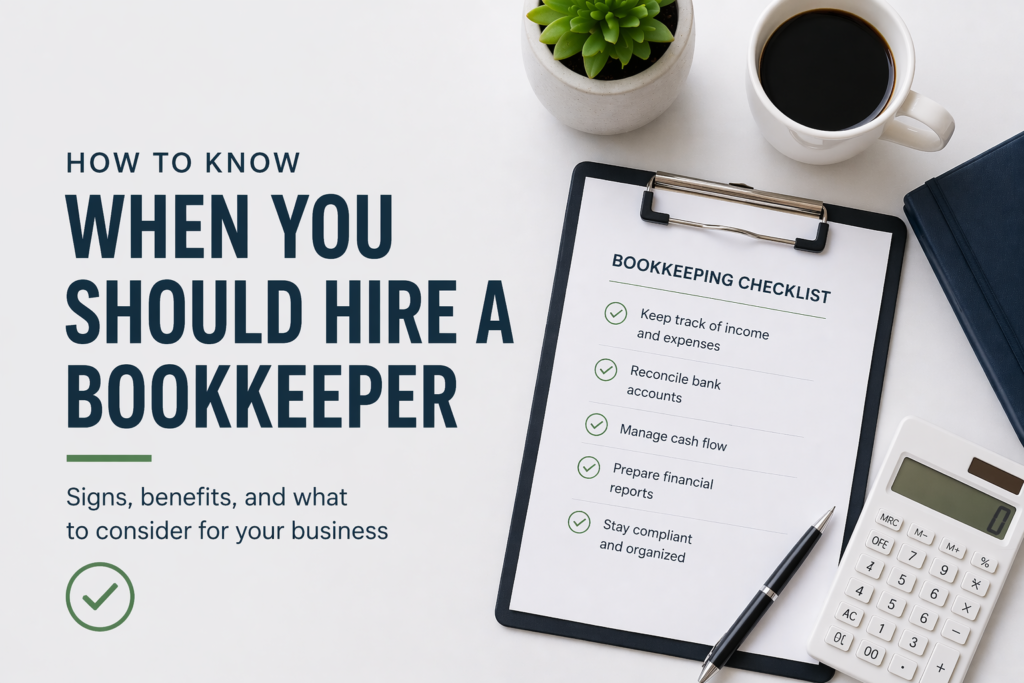
Running a business means wearing a lot of hats: sales, marketing, operations, and of course, finances. While many business owners start off managing their own books, there often comes a point where doing everything yourself is no longer sustainable.
So how do you know when it’s time to hire a bookkeeper?
In this guide, we’ll break down the signs to look for, along with the pros and cons of outsourcing your bookkeeping, so you can make the best decision for your business.
Signs It’s Time to Hire a Bookkeeper
Before diving into the pros and cons, here are a few common indicators that you may need help:
- You’re spending too much time on bookkeeping instead of growing your business
- Your financial records are disorganized or behind
- You’re unsure about your cash flow or profitability
- Tax season feels overwhelming or stressful
- You’ve made financial mistakes in the past
If any of these sound familiar, it may be time to consider outsourcing your bookkeeping.
Pros of Outsourcing Your Bookkeeping
1. More Time to Focus on Your Business
One of the biggest advantages of outsourcing your bookkeeping is the time you get back.
As a business owner, your time is best spent on activities that drive growth, like building relationships, closing deals, and improving your products or services. Bookkeeping, while essential, can easily become a distraction.
By handing off your financial tasks, you can:
- Avoid getting bogged down in administrative work
- Focus on what you’re truly passionate about
- Spend more time scaling your business
2. Reduce Mistakes and Costly Errors
Having an expert manage your books can significantly reduce the risk of errors.
Mistakes in your financial records aren’t just inconvenient; they can be expensive. Common issues include:
- Penalties from the CRA due to incorrect filings or missed deadlines
- Inaccurate financial statements that lead to poor decision-making
- Payroll errors that impact employees and compliance
- Accounts receivable/payable mistakes that affect your cash flow
A professional bookkeeper understands the rules, systems, and best practices needed to keep everything accurate and up to date.
3. Better Financial Insights and Smarter Decisions
Clean, organized financials are the foundation of good decision-making.
When you work with a bookkeeper, you gain access to accurate, timely reports that help you understand your business performance. This allows you to:
- Track what matters most (revenue, expenses, profit margins)
- Identify trends and opportunities
- Make informed decisions with confidence
A good bookkeeper doesn’t just record transactions; they help you understand your numbers.
4. Improved Efficiency in Your Business
An experienced bookkeeper can help streamline your financial processes.
This might include:
- Setting up better systems and workflows
- Automating repetitive tasks
- Improving invoicing and payment collection processes
These efficiencies can save you time, reduce stress, and ultimately improve your bottom line.
5. Scalability as Your Business Grows
As your business expands, your financial complexity increases.
Outsourcing your bookkeeping ensures that your systems can grow with you. Instead of constantly trying to catch up or learn new processes, you’ll have someone in place who can adapt and support your growth.
Cons of Outsourcing Your Bookkeeping
1. Cost
For many small business owners, cost is the biggest concern.
Bookkeeping services can feel expensive, especially when you’re just starting out and trying to manage cash flow carefully.
If you’re not ready to outsource yet, consider learning the basics yourself. (Heads up: we’re launching a free DIY bookkeeping course on YouTube soon. Sign up for our mailing list so you can be notified.)
2. Less Direct Control
When you outsource, you’re trusting someone else with your financial data.
While this can be a positive, it may feel uncomfortable if you’re used to handling everything yourself. You’ll need to rely on clear communication and regular reporting to stay informed.
3. Onboarding and Setup Time
Getting started with a new bookkeeper takes time.
You may need to:
- Organize your existing records
- Provide access to accounts and systems
- Answer questions about past transactions
While this is usually a one-time effort, it can feel like extra work upfront. Luckily, our team is trained to make this process as painless as possible 🙂
4. Finding the Right Fit
Not all bookkeepers are the same.
It can take time to find someone who understands your industry, communicates well, and aligns with your business needs. Choosing the wrong person can lead to frustration or additional costs.
Should You Outsource or Keep It In-House?
The decision ultimately comes down to your current situation, priorities, and budget.
You may want to keep bookkeeping in-house if:
- Your business is very small with simple transactions
- You have the time and willingness to learn
- You’re trying to minimize expenses in the early stages
On the other hand, outsourcing may be the better choice if:
- Your time is better spent growing the business
- Your finances are becoming more complex
- You’ve experienced errors or confusion in the past
- You want clearer insights into your financial performance
There’s no one-size-fits-all answer. Many business owners start by doing their own bookkeeping and transition to outsourcing as they grow.
Conclusion
Hiring a bookkeeper is not just about saving time. It’s about gaining clarity, reducing risk, and setting your business up for long-term success.
If bookkeeping is taking time away from what truly matters, causing stress, or leading to costly mistakes, it may be time to bring in an expert.
However, if you’re just starting out and your finances are still simple, it can make sense to manage things yourself while you build a foundation.
The key is to regularly evaluate your situation and make a decision that supports your growth, not hold it back.
Not sure if outsourcing bookkeeping is right for you?
We can help.
Request a free quote today and find out how our bookkeeping services can save you time, reduce stress, and give you the financial clarity you need to grow your business.
We’re here to learn more about your business and take the next step toward smarter financial management.