

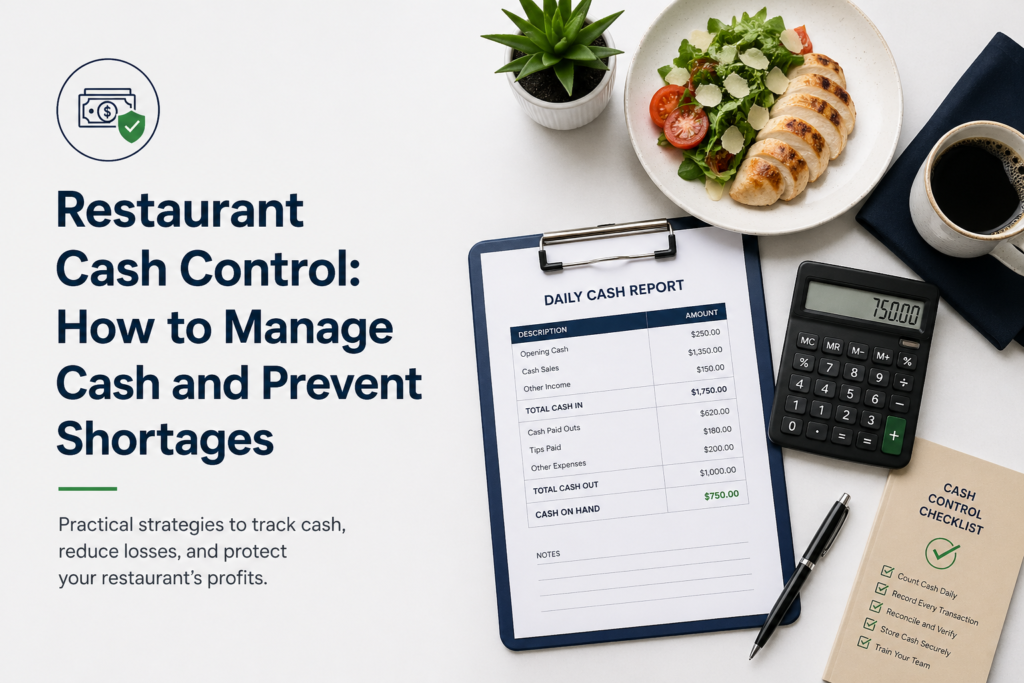
Cash can disappear faster than a plate of fries during dinner rush. Without strong cash controls, even profitable restaurants can lose thousands of dollars each year to simple errors, poor procedures, or outright theft.
Running a restaurant means handling a high volume of cash transactions every single day. While credit cards have become increasingly common, cash still plays a major role in many establishments.
That makes cash management one of the most important financial controls your restaurant can have.
If you don’t have an accurate handle on your cash balances, your business may be exposed to risks such as:
- Cash shortages
- Employee theft
- Recording errors
- Fraudulent transactions
- Inaccurate financial statements
The good news? With the right systems in place, managing cash becomes much easier.
Why Cash Control Matters
Cash is one of the easiest assets to steal and one of the hardest to track without proper procedures.
Unlike inventory or equipment, cash can disappear instantly. Even small discrepancies, if left unresolved, can add up to significant losses over time.
Strong cash controls help you:
- Protect your profits
- Identify problems quickly
- Improve accountability
- Maintain accurate financial records
- Reduce the risk of theft and fraud
Perform Daily Cash Counts
Daily cash counting should be a non-negotiable part of your restaurant’s operations.
At a minimum, cash should be counted:
- At the start of each day
- At the end of each day
For higher-volume restaurants, periodic cash counts throughout the day can provide an additional layer of security.
Start-of-Day Cash Count
Before opening, verify that each register contains the exact float amount you expect.
For example, if your float should be $300, there should be exactly $300 in the till.
If the register is short or over, recount immediately and investigate the discrepancy before service begins.
Whenever possible, the employee counting the opening balance should be different from the person who closed the register the night before. This separation of duties helps reduce errors and discourages theft.
Ensure All Cash Sales Are Properly Recorded
Every cash transaction must be entered into your Point-of-Sale (POS) system.
Employees should:
- Ring up every sale immediately
- Use the “Cash” payment option only for actual cash transactions
- Never use cash tender buttons for coupons, discounts, or other payment methods
Proper POS usage creates an accurate audit trail and makes reconciliation possible.
Monitor Cash Throughout the Day
As customers pay with cash, your register balance will increase.
Your POS system should always be able to tell you exactly how much cash has been collected at any given time.
If needed, you can perform spot checks during the day to confirm that the physical cash matches your POS records.
These surprise counts can be highly effective in preventing theft.
End-of-Day Cash Reconciliation
At closing, count the cash in each register and reconcile it using this simple formula:
Expected Cash = Opening Float + Cash Sales – Recorded Cash Withdrawals
Your actual cash on hand should match this amount exactly, or be very close to it.
Investigate All Discrepancies
Any difference (large or small) should be investigated immediately.
This includes both shortages and overages.
A cash overage may seem like good news, but it often indicates:
- Incorrect change given
- Transactions entered incorrectly
- Sales not properly recorded
Accuracy matters. Your goal is not to have “more” cash, it’s to have the exact amount you should have.
How to Reduce Cash Theft
Unfortunately, cash theft and mismanagement are a reality in the restaurant industry.
It can occur through:
- Employee theft
- Carelessness
- Unauthorized register access
- Fraudulent transactions
- Counterfeit bills
The best defense is proactive prevention.
Restrict Register Access
Your POS system should require employees to:
- Log in with a unique access code
- Request manager approval for certain actions
- Record all no-sale openings
This creates accountability and makes suspicious activity easier to identify.
Require Printed Receipts
A receipt printer is one of the simplest and most effective anti-theft tools.
For every cash transaction:
- A receipt should be printed automatically
- A copy should be placed directly into the cash drawer
This creates a physical record that can be matched against POS data and security footage.
Many major restaurant chains, including McDonald’s, use this exact process.
The next time you pay with cash at a McDonald’s location, pay attention to how the cashier processes your order. You’ll likely see these controls in action.
Use Security Cameras
Position cameras so that all cash-handling areas are clearly visible.
Security footage can help:
- Deter theft
- Investigate discrepancies
- Confirm proper procedures are being followed
Perform Regular Management Reviews
Managers should routinely compare:
- Cash on hand
- POS reports
- Deposit records
- Accounting records
Regular oversight helps catch problems early before they become costly.
Conduct Periodic Cash Audits
In addition to daily reconciliations, you should periodically perform a full cash audit.
A cash audit involves comparing the amount recorded on your balance sheet to the actual cash physically on hand.
The frequency depends on your restaurant’s transaction volume, but monthly is a good starting point for many businesses.
High-volume locations may benefit from weekly audits.
Final Thoughts
Cash control isn’t just about preventing theft; it’s about protecting your profits and maintaining accurate financial records.
By implementing strong procedures, training your staff properly, and reviewing cash regularly, you can significantly reduce losses and gain greater confidence in your restaurant’s financial health.
The restaurants that manage cash best are often the ones that operate most profitably.
Need Help Improving Your Restaurant’s Financial Controls?
Strong cash management is essential for every successful restaurant.
If you’re having trouble managing your restaurant’s cash balances, we can help. Book a free consultation today to receive a professional review of your financial systems, along with personalized recommendations to strengthen cash controls, reduce losses, and improve profitability.